
Philanthropy and Legacy
School 10 — Bonus
School 10 · Bonus · About 15 minutes
Money is a tool, and tools are meant to be used. After everything you have learned — earning, saving, investing, protecting, and planning — one question remains: what is it all for? Philanthropy is giving your time, talent, and treasure to causes that matter, and your legacy is the story your money tells after you are gone. In this final class, we will teach you about building a giving plan, the charitable vehicles you can use, passing your values to your family, and having the succession conversations that keep everyone on the same page.
Your Giving Plan
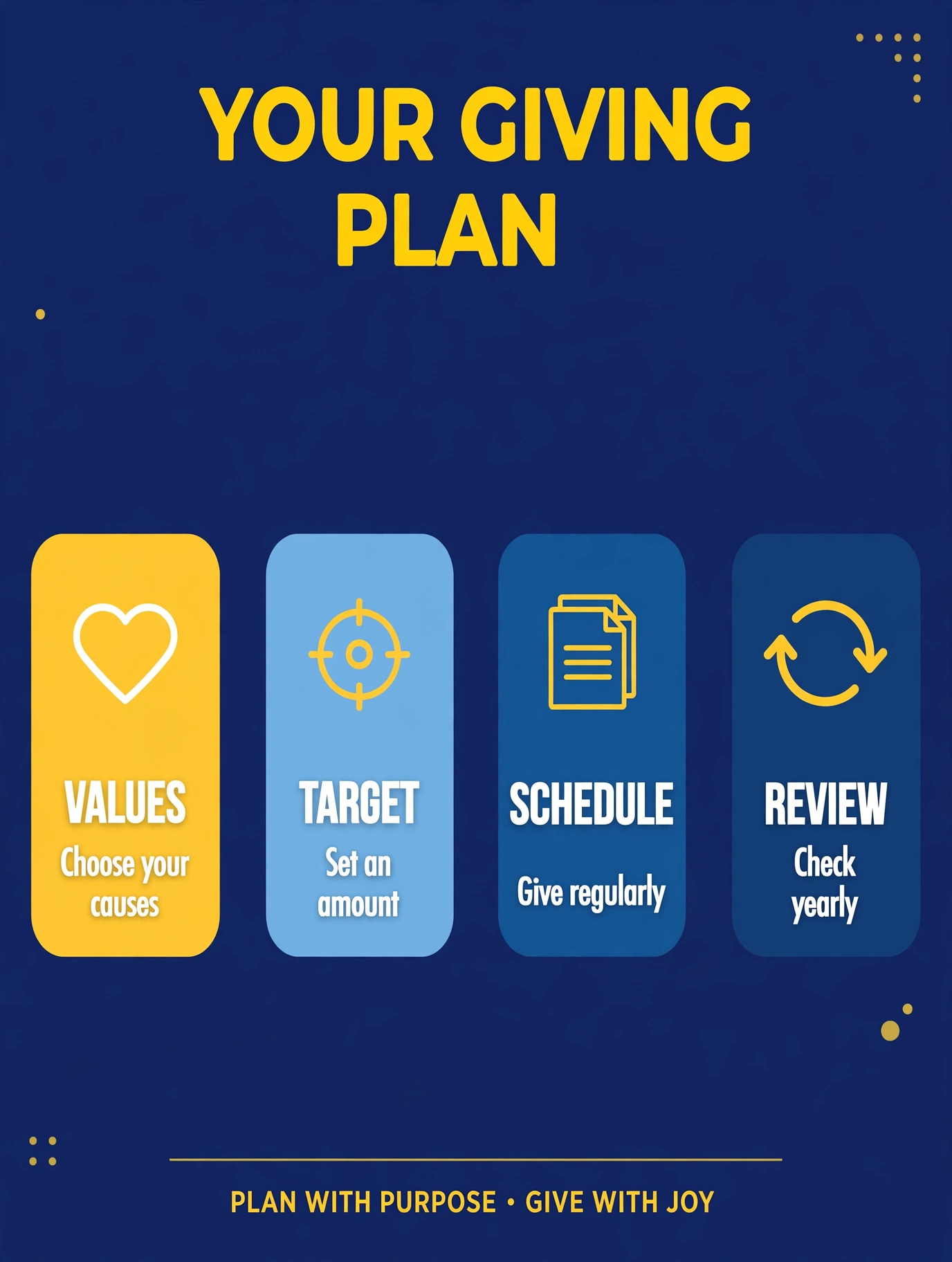
Most people give on impulse — a charity appeal in December, a fundraiser at school, a guilty click on a donation link. There is nothing wrong with spontaneous generosity, but a giving plan turns giving from a reaction into a habit. A giving plan is a simple written statement of what causes you support, how much you give, and when you give it. It is the same discipline as a budget, pointed outward.
Start with your values. Ask yourself: what problems in the world bother me most? What did I wish someone had done for me? Pick two or three causes that genuinely move you — clean water, education, your faith community, animal shelters, whatever lights you up. Focus beats scatter: giving a little to twenty causes feels good for a day, but giving steadily to two or three lets you see real results.
Next, set an amount. The classic guideline is a tenth of your income — the old tithe — but any number you can sustain works. Say you set aside $100 a month for giving. That is $1,200 a year, every year, to causes you chose on purpose. Start smaller if you need to; the habit matters more than the size. Automate it like a bill so it happens without willpower, and once a year, review: did your giving reflect your values, and did the charities use it well?
Charitable Vehicles: Three Ways to Give
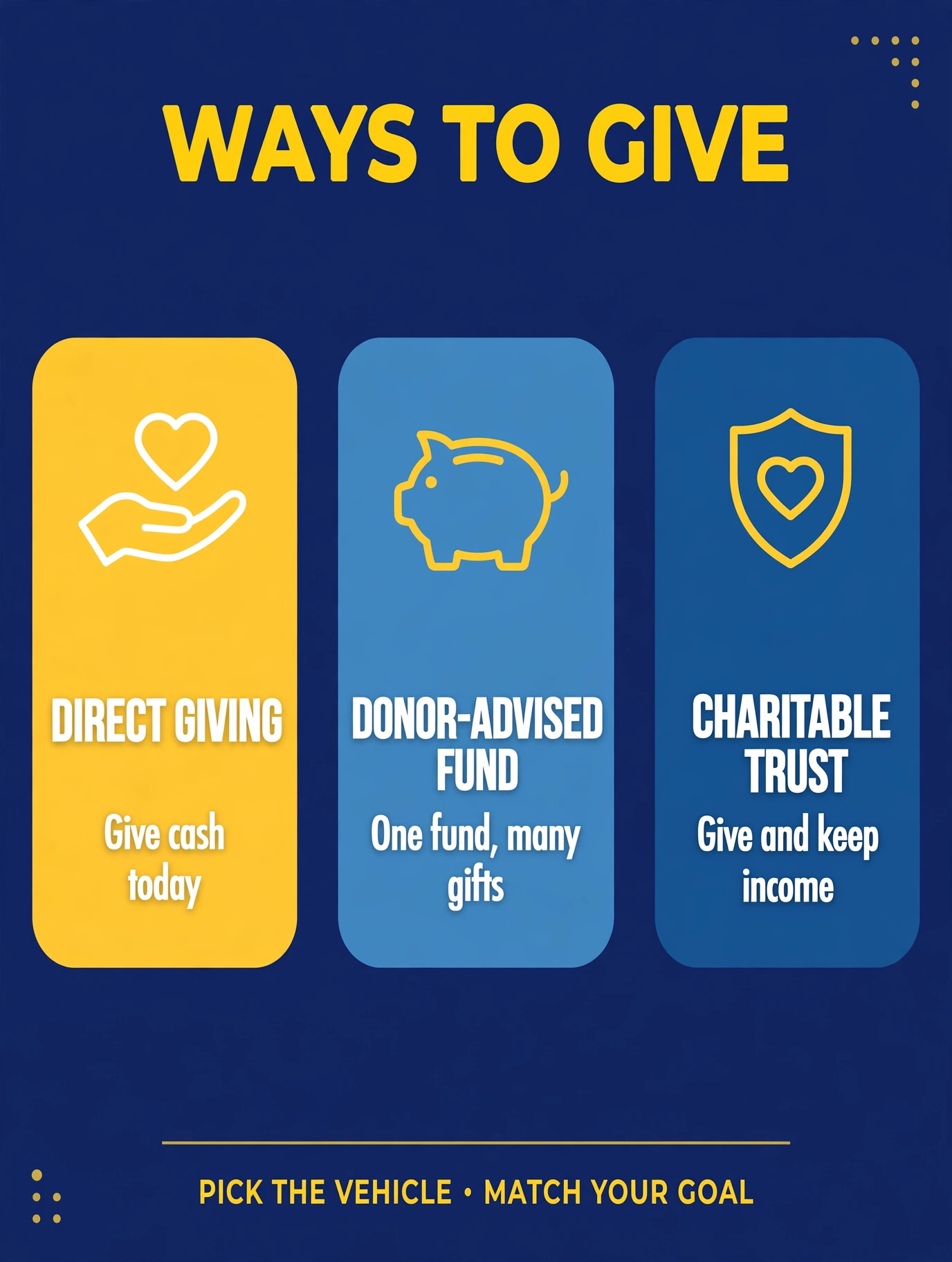
A charitable vehicle is simply the method you use to get money from your pocket to a cause. For most people, direct giving is enough: you write a check, click donate, or hand cash to the charity of your choice. It is simple, immediate, and perfect for everyday generosity. If direct giving covers your plan, stop here — you do not need anything fancier.
If your giving grows, a donor-advised fund is worth knowing about. Think of it as a charitable savings account: you contribute money into the fund once, and then recommend grants to different charities over time, in whatever amounts and schedule you choose. One contribution can become dozens of gifts across years. It is a popular choice for people who want to give thoughtfully and involve family members in choosing where the money goes.
The third vehicle is the charitable trust. This is a legal arrangement where you place assets in a trust that supports a charity — and in some designs, the trust also pays you or your family an income for a set number of years before the charity receives what remains. Charitable trusts are more complex and usually involve a lawyer and a financial professional, so they suit larger gifts. The general idea to carry with you: direct giving for today, donor-advised funds for organized giving over time, charitable trusts for larger legacy gifts.
Family Values: Teaching the Why
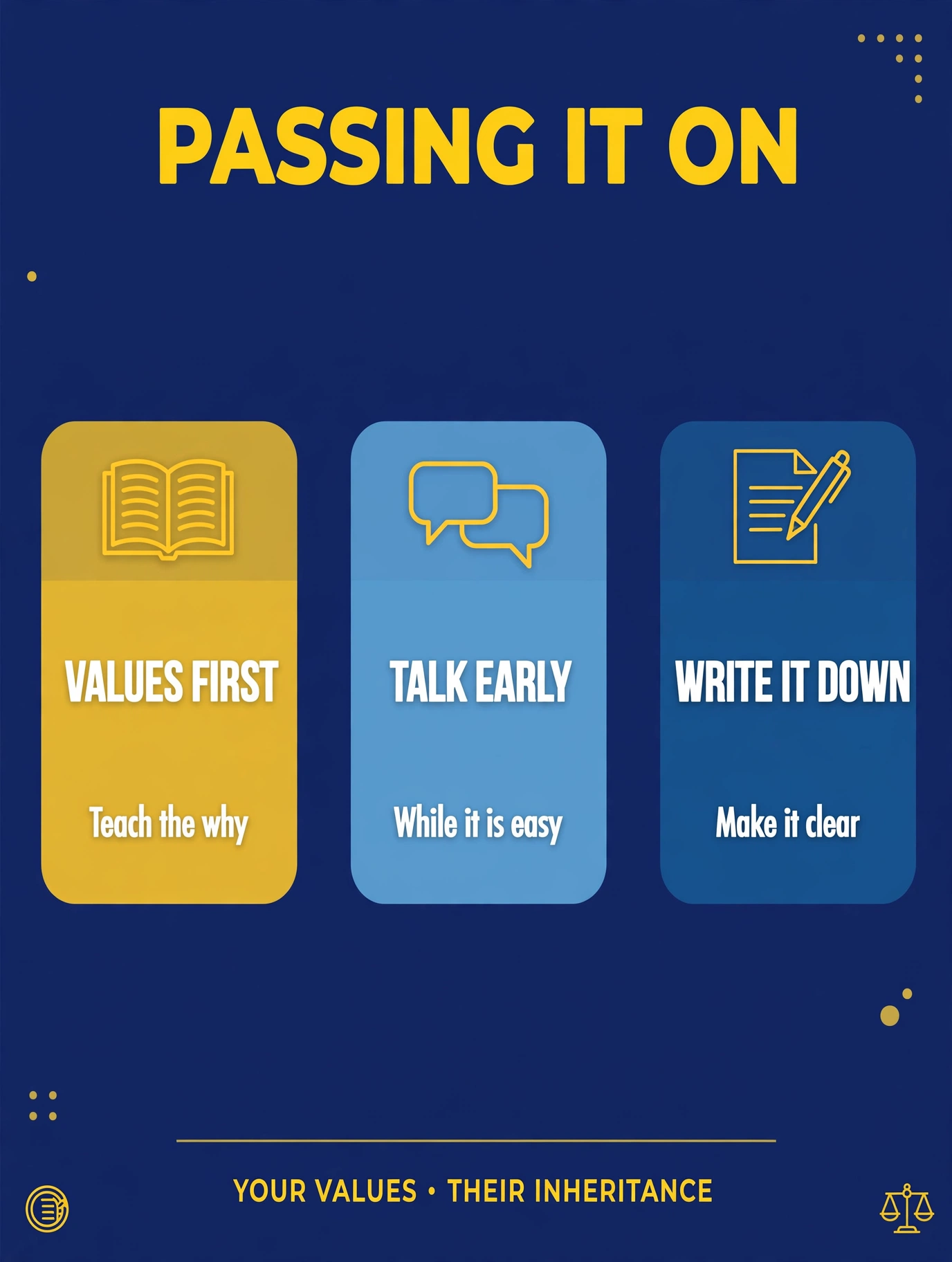
Money without values is just noise — and values without teaching fade in one generation. Passing on your family values means making sure the people you love understand why you live, work, and give the way you do. Your kids and grandkids will copy what they see long before they follow what they say, so the teaching starts with your example: they watch how you spend, how you save, and how you give.
Make the values explicit. Write down three to five sentences about what money means in your family — for example, "We work hard and give generously," or "We live below our means so we can help others." Share stories: why you support a particular cause, what it felt like the first time you gave, a mistake you made with money and what it taught you. Stories stick; lectures slide off.
Give them practice. Let children choose a charity and donate a small amount of their own money — even a few dollars from an allowance makes the lesson real. As they grow, bring them into your giving plan: read the charity updates together, volunteer as a family, let them vote on where part of the giving goes. A child who has practiced generosity does not need to inherit it — they already own it.
Succession Conversations: Talking About It
A succession conversation is a calm, planned discussion with your family about what happens to your money and your giving after you are gone — who gets what, who manages the plan, and which causes you want supported. Most families avoid this talk until a crisis forces it, and that is exactly when it goes badly: grief plus confusion plus money is a recipe for conflict.
Have the conversation early, while everyone is healthy and the stakes feel low. Keep it simple and human: explain your values first, then the plan. "Here is what matters to us, here is how we have arranged things, and here is what we would love to see continue." You do not need to reveal every number — but the people who will carry out your wishes must know the plan exists, where the documents live, and who to call.
Write it down. Verbal promises fade and get misremembered; a written plan — even a simple letter listing your accounts, your wishes, and your key contacts — removes doubt. Review it every few years as life changes. And involve the next generation in the giving part: many families run their charitable giving together, with everyone suggesting causes. That turns inheritance into apprenticeship — your family learns your values by practicing them alongside you.
Key terms
- Philanthropy
- giving your time, talent, and treasure to causes that matter.
- Legacy
- the lasting impact of your values and your money after you are gone.
- Giving plan
- a written statement of what causes you support, how much you give, and when.
- Tithe
- a traditional guideline of giving a tenth of your income.
- Charitable vehicle
- the method you use to get money to a cause: direct giving, donor-advised fund, or charitable trust.
- Direct giving
- giving cash or checks straight to a charity; simple and immediate.
- Donor-advised fund
- a charitable account you fund once, then use to recommend grants to charities over time.
- Charitable trust
- a legal arrangement that supports a charity and can also pay income to you or your family for a time.
- Family values
- the shared beliefs about money, work, and generosity that a family lives by and passes on.
- Succession conversation
- a planned family discussion about what happens to your money and giving after you are gone.
What's next
You did it. From your very first class to this one, you have walked the entire Academy — earning, saving, investing, protecting, planning, and now giving. That is a complete financial education, built one lesson at a time, and you finished it. Take a moment to be proud of that; most people never do.
The learning does not end here, though. Head back to the Academy school page and revisit any school whenever you like — lessons land differently the second time, once you have real experience behind them. Keep reviewing, keep practicing, and keep giving. Prosperity was never just about having more. It was always about becoming someone worth more — and now you have the map.
The quiz
Philanthropy and Legacy — Quiz
3 questions · pass with 3 correct
1.What is a giving plan?
2.Which best describes a donor-advised fund?
3.Why should you have a succession conversation early?